

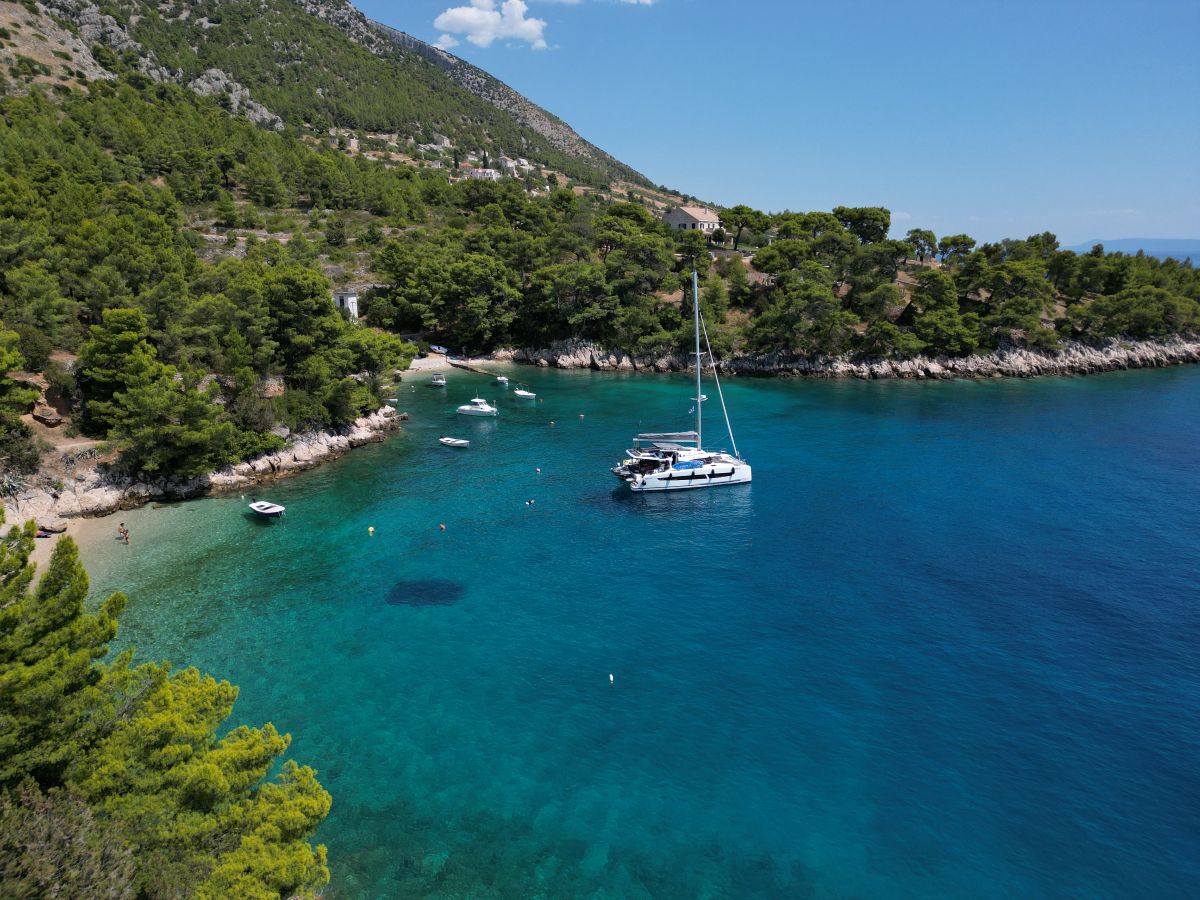
Central Dalmatia Sailing Guide: Ports, Anchorages, Attractions, Restaurants
A complete introduction to sailing and yacht chartering in Croatia’s most famous sailing region, also known as the Split region
Central Dalmatia is widely considered one of the best sailing regions in the Mediterranean. With hundreds of islands, protected bays, historic towns, and reliable summer winds, it offers ideal conditions for both experienced sailors and first-time charter guests.
Stretching roughly from Šibenik in the north to the island of Vis and the Pelješac channel in the south, this region combines spectacular landscapes, rich maritime history, and a well-developed nautical infrastructure. Whether you plan a relaxed island-hopping itinerary or a more adventurous sailing route, Central Dalmatia offers an unforgettable experience.
This guide introduces the essentials every charter guest should know before sailing in this part of the Adriatic.
Best Starting Points for Sailing Itineraries
Choosing the right starting point can significantly shape the sailing experience. Fortunately, Central Dalmatia offers several excellent yacht charter bases depending on the itinerary and sailing preferences.
Split Area – Best for First-Time Visitors
Starting from Split or nearby marinas allows sailors to quickly reach some of the region’s most famous islands. Within the first day of sailing it is possible to arrive at Šolta or Brač, followed by routes toward Hvar, the Pakleni Islands, and Vis.
This makes the Split area the most common choice for a classic sailing itinerary in Central Dalmatia.
Trogir and Kaštela – Convenient and Well Connected
Marinas around Trogir and Kaštela are especially popular with charter guests arriving by air, as they are located only a few minutes from Split International Airport.
These bases provide the same sailing possibilities as Split but often with slightly easier logistics on arrival and departure days.
Šibenik – Ideal for Exploring Two Regions
Šibenik offers a strategic starting point for sailors seeking greater variety in their route. From here, it is possible to explore the islands of Central Dalmatia or head north toward the Kornati archipelago, one of the most spectacular island groups in the Adriatic.
Because it is slightly farther from the busiest tourist areas, sailing routes starting from Šibenik often feel more relaxed and less crowded.
Geography and the Sailing Area
Central Dalmatia lies along Croatia’s middle Adriatic coast and includes some of the country’s most famous islands, such as Brač, Hvar, Vis, and Šolta. The coastline is deeply indented and dotted with islands that provide natural protection from open-sea conditions.
For sailors, this geography creates a unique advantage:
- short sailing distances between islands
- countless bays and anchorages
- relatively protected waters compared to open Mediterranean areas
Typical sailing legs between destinations are 10–25 nautical miles, making it possible to enjoy multiple stops in a single day.
The region also offers excellent nautical infrastructure, including marinas, town quays, mooring fields, and restaurant piers.

Marina Baotić, Trogir
A Brief History of Central Dalmatia
The maritime heritage of Dalmatia dates back thousands of years. The area was first settled by Illyrian tribes before becoming an important part of the Greek trading network and later the Roman Empire.
Many of the coastal towns sailors visit today were established during these early periods. Roman influence can still be seen in places like Split, where the city developed around the famous Diocletian’s Palace.
During the Middle Ages, Dalmatian cities were influenced by Venice, which controlled much of the Adriatic trade for centuries. This Venetian legacy is still visible in architecture, fortifications, and urban design across the islands.
Today, this mix of Mediterranean cultures creates the distinctive atmosphere sailors experience while exploring the region’s historic harbors and waterfront towns.
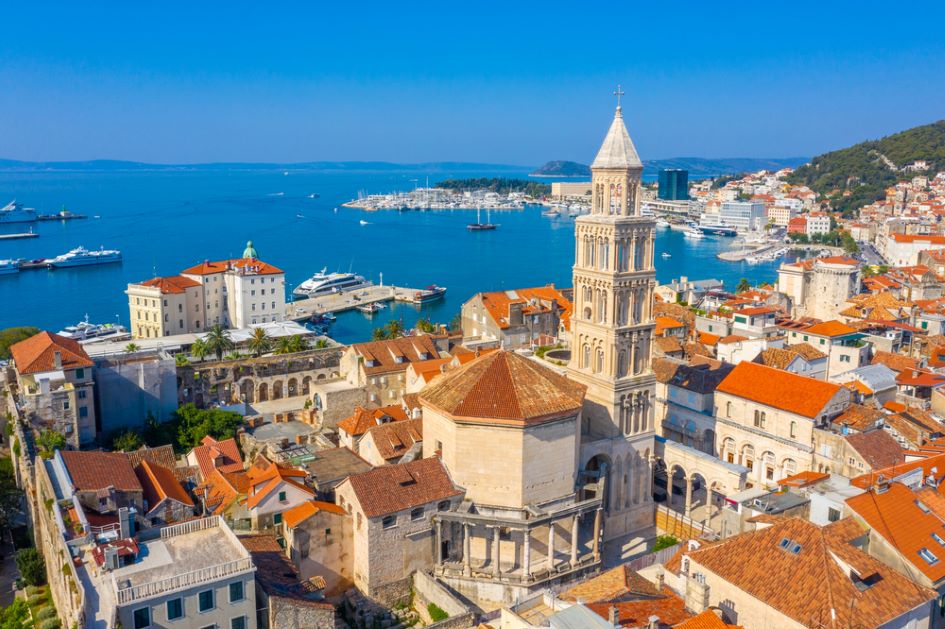
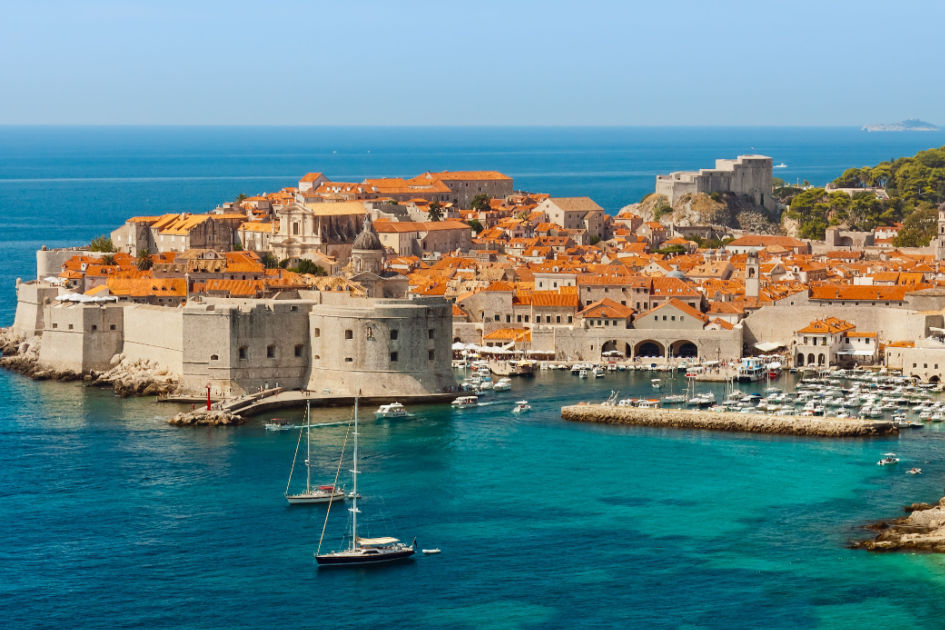
Historic Split seen from above, with the bell tower of Saint Domnius Cathedral rising above the old town built around Diocletian's Palace. As one of the main charter hubs in Central Dalmatia, Split is the perfect starting point for sailing routes toward Šolta, Brač, Hvar, and Vis.
Culture and Lifestyle
Dalmatian culture is strongly connected to the sea.
Fishing, shipbuilding, and maritime trade shaped local life for centuries, and many island communities still maintain these traditions today. Small stone villages, waterfront promenades, and lively town squares form the heart of social life.
Food is also an essential part of the experience. Coastal cuisine focuses on simple, high-quality ingredients such as:
- fresh seafood and grilled fish
- olive oil and Mediterranean herbs
- local wines from island vineyards
- traditional dishes like peka and black risotto
Many island restaurants can even be reached directly by boat, offering moorings for visiting sailors.
👉 The Top 5 Traditional Dalmatian Dishes

Traditional "Peka" dish, octopus with potatoes ina traditional baking lid at the fireplace - "komin."
Why Central Dalmatia is Perfect for Sailing
Several factors make Central Dalmatia one of Europe’s most popular sailing destinations.
Protected Island Geography
The islands form natural barriers against large waves and ocean swells. This means sailors can often choose routes sheltered from the wind.
Short Distances
Island hopping is easy. Sailing legs are relatively short, allowing plenty of time for swimming, exploring towns, or relaxing at anchor.
Excellent Infrastructure
The region offers:
- modern marinas
- town quays and harbors
- organized mooring fields
- numerous safe anchorages
Thanks to the Dalmatian islands' central position, sailing distances from the main charter bases such as Trogir, Split, Kaštela, and Šibenik are relatively short. Most islands can be reached within a few hours of sailing, which makes Central Dalmatia ideal for relaxed island-hopping itineraries.
| Departure Base | Šolta (Maslinica) | Brač (Milna) | Hvar (Hvar Town) | Pakleni (Palmižana) | Šćedro (Luka) | Vis (Vis Town) |
|---|---|---|---|---|---|---|
| Trogir | 10 NM (2h) | 12 NM (2–3h) | 22 NM (4h) | 24 NM (4–5h) | 32 NM (5–6h) | 25 NM (4–5h) |
| Split | 16 NM (3h) | 13 NM (2–3h) | 25 NM (4–5h) | 27 NM (5h) | 35 NM (6h) | 30 NM (5h) |
| Kaštela | 14 NM (2–3h) | 11 NM (2h) | 23 NM (4h) | 25 NM (4–5h) | 33 NM (6h) | 28 NM (5h) |
| Rogoznica | 22 NM (4h) | 24 NM (4–5h) | 32 NM (6h) | 34 NM (6h) | 42 NM (7h) | 35 NM (6h) |
| Šibenik | 35 NM (6h) | 38 NM (6–7h) | 45 NM (7h) | 47 NM (7–8h) | 55 NM (8h) | 50 NM (7–8h) |
Clear Water and Natural Beauty
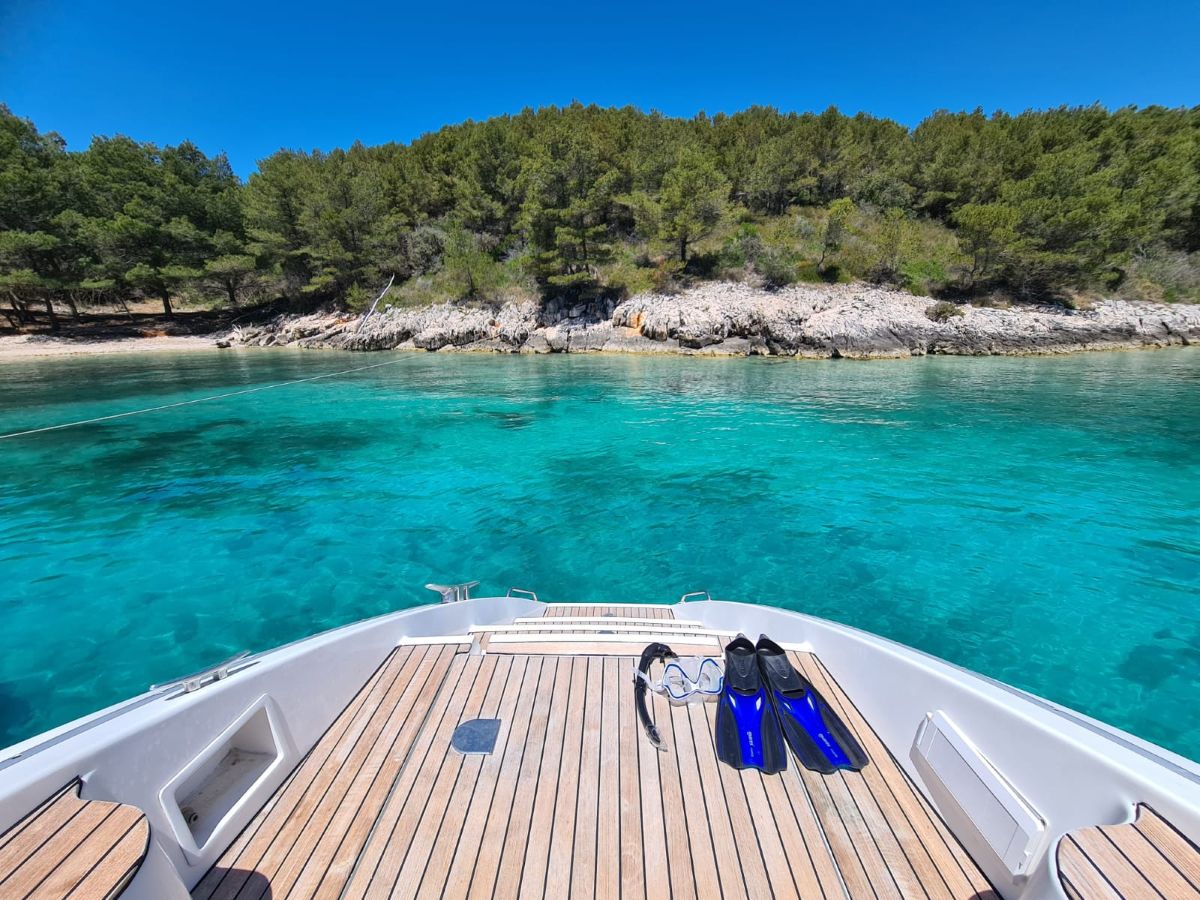
The Adriatic Sea is known for its exceptional clarity. In many bays, the seabed is visible even at depths of 20 - 30 meters.
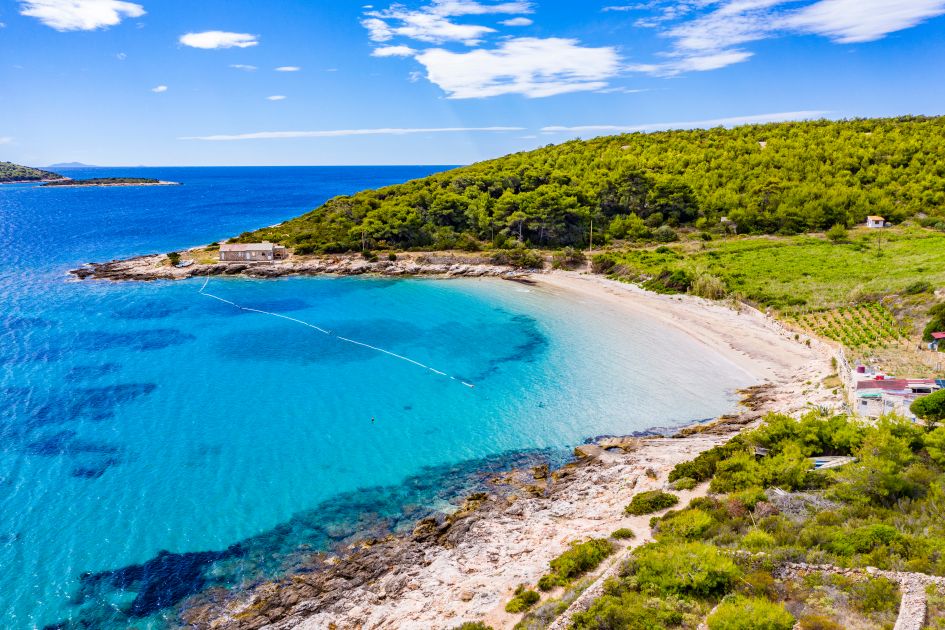
Zaglav beach, Vis Island
Sailing Conditions in Central Dalmatia
Sailing conditions in the Adriatic are generally moderate and predictable during the charter season.
The main sailing season runs from April to October, with the most popular months being May through September.
Sea temperatures during summer range between 22°C and 27°C, making swimming stops a regular part of any sailing itinerary.
The Adriatic is also a microtidal sea, meaning tides are small, usually around 30 - 50 cm, so they rarely affect navigation or anchoring significantly.
Typical summer wind strengths range between 10 and 20 knots, ideal for leisure sailing.
The Three Main Adriatic Winds
Understanding local winds is essential when planning a sailing trip in Dalmatia.
Maestral (Mistral)
The Maestral is the most common summer wind and the favorite among sailors.
- direction: northwest
- strength: typically 10–20 knots
- timing: develops late morning and peaks mid-afternoon
It creates excellent afternoon sailing conditions and usually calms down around sunset.
Bura (Bora)
The Bura is a strong and sometimes sudden northeast wind.
- dry and cold
- very gusty
- can reach high wind speeds quickly
Although less common during summer, sailors should treat Bura warnings seriously and seek shelter when necessary.
Jugo (Sirocco)
Jugo is a warm southeast wind that builds slowly over several days.
- often brings clouds and rain
- creates longer waves and swell
- usually well forecast in advance
Because it develops gradually, sailors typically have time to adjust their plans and find a sheltered harbor.
The Central Dalmatia Sailing Experience
What truly makes sailing in Central Dalmatia special is the variety of experiences within a relatively small area.
Within a single week, you can:
- explore medieval island towns
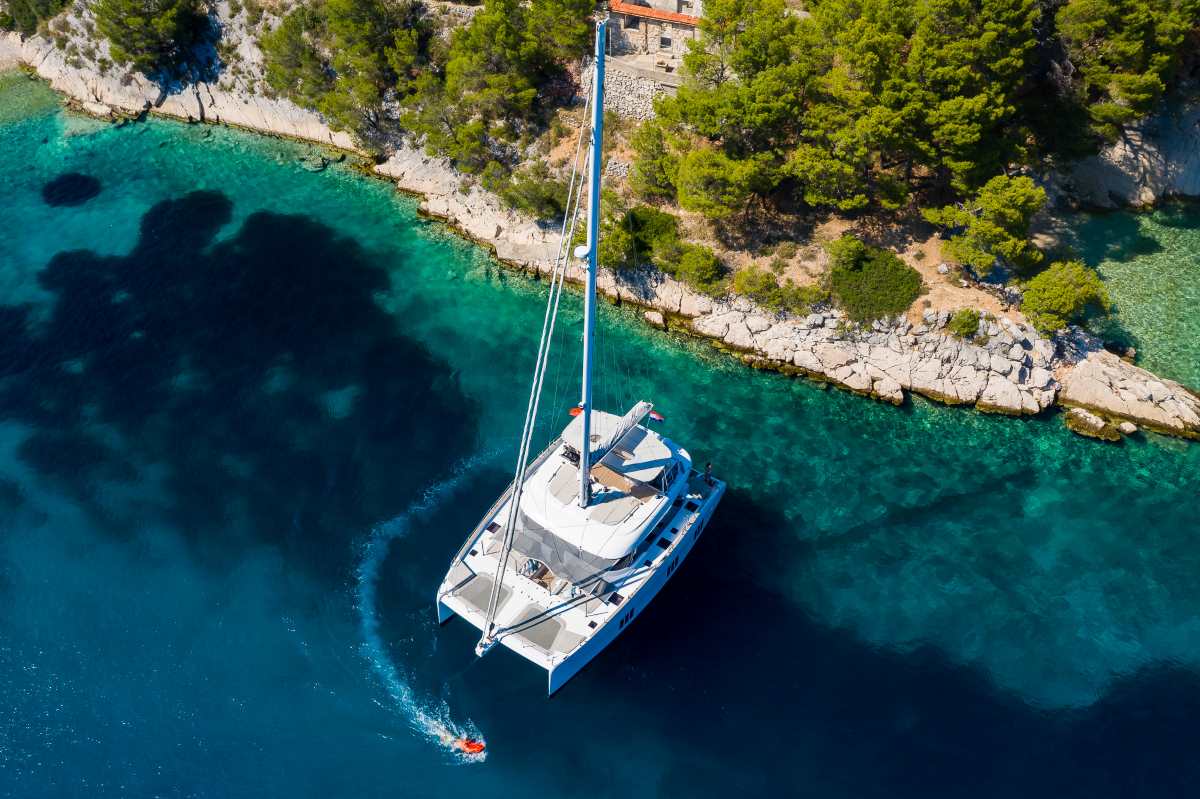
- swim in hidden turquoise bays
- visit UNESCO heritage sites
- dine at waterfront restaurants accessible only by boat
- anchor under dramatic cliffs or in quiet fishing villages
This combination of nature, culture, and easy navigation is why the region attracts thousands of sailors every year.
If you’re exploring the central Dalmatian islands by sailboat, catamaran, or motoryacht, you may also find these sailing guides useful:
👉 Sailing Guide to Hvar – discover the best anchorages, marinas, and bays around one of Croatia’s most popular sailing destinations.
👉 Sailing Guide to Pakleni Islands – find the best anchorages, beach bars, and hidden coves in this beautiful island chain just off Hvar.
👉 Sailing Guide to Brač – explore beautiful coves, charming towns, and safe mooring spots across the island.
👉 Sailing Guide to Šolta – a peaceful island with authentic villages and excellent sheltered bays.
👉 Sailing Guide to Vis – learn where to anchor, what to visit, and why Vis is a favorite stop for sailors in the Adriatic.
👉 Sailing Guide to Šćedro – explore quiet anchorages, natural bays, and one of the most peaceful sailing stops in central Dalmatia.





 Give us a call or drop an email, We`ll answer you within 24 hours